Non è "solo una riunione più lunga": trasformare la collaborazione in Sorint attraverso i Workshop
-
Luisa Miolano
- 13 Feb, 2026
- 09 Mins read
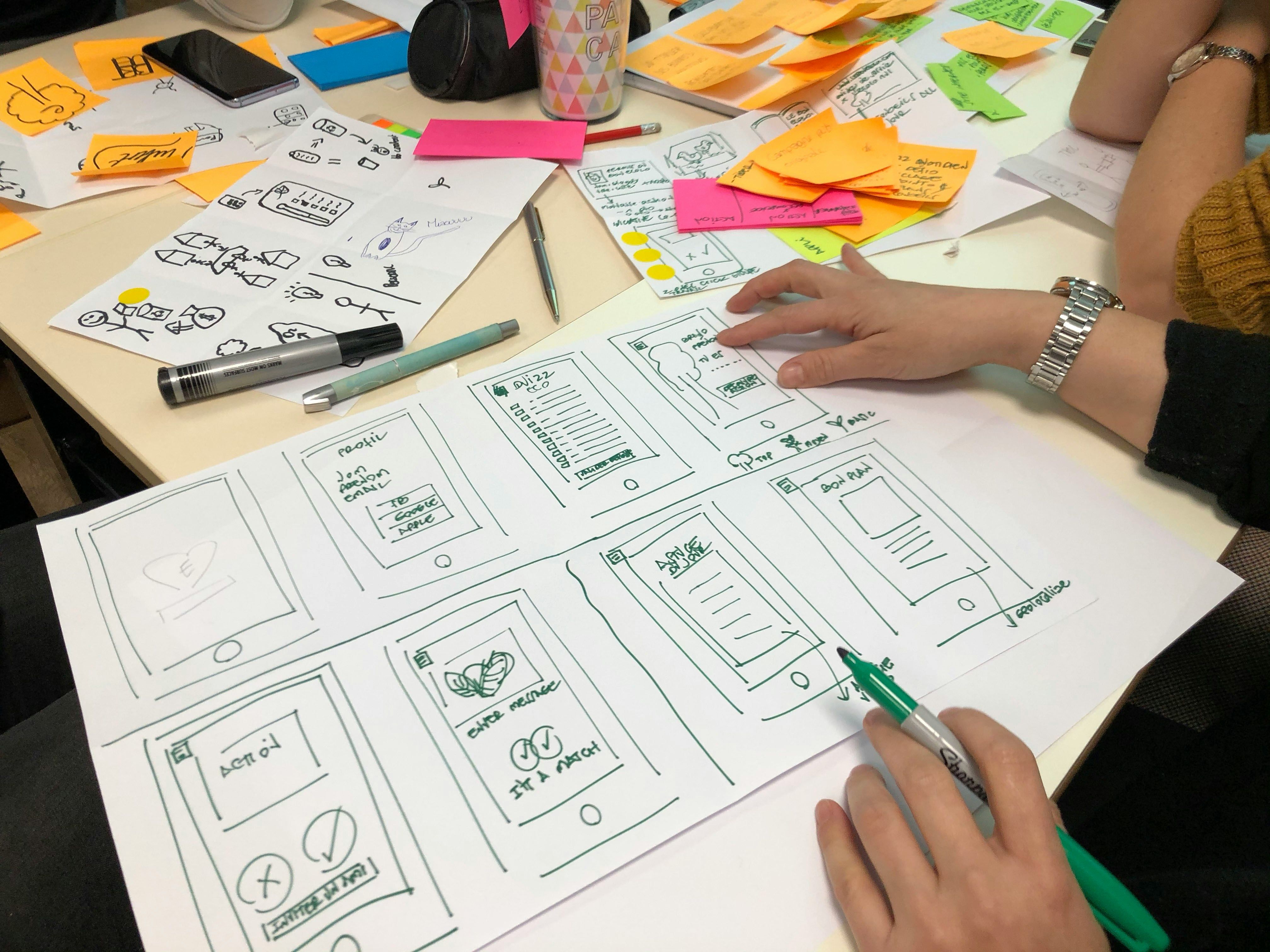
In un’era in cui l’AI genera codice e contenuti alla velocità della luce, fermarsi per "pensare insieme" è l'unico vantaggio competitivo che ci resta.
Il paradosso della "Riunione infinita": oltre il drenaggio mentale
So cosa state pensando quando vedete comparire sul calendario un invito per un "Workshop di 4 ore". La reazione istintiva di un profilo tecnico è spesso: "Ecco un’altra riunione interminabile che poteva essere un’email. Quando troverò il tempo per lavorare?"
Come Lead del team Human Centered Design, sono qui per sfatare un mito pericoloso:
un workshop non è una riunione lunga. Se vi è sembrato così in passato, probabilmente era un workshop progettato male.
Oggi voglio spiegarvi la differenza tecnica e funzionale tra i due, e perché, paradossalmente, l'avvento dell'Intelligenza Artificiale rende i workshop lo strumento più prezioso per il nostro stack tecnologico e decisionale.
Meeting vs. Workshop: una distinzione strategica
Confondere questi due strumenti è un errore che costa caro in termini di focus e risultati. Per noi del team Human-Centered Design (HCD), la distinzione è netta e deve diventarlo per tutta l'organizzazione. Sotto riporto una fonte del Nngroup **che ne spiega i principi chiave.
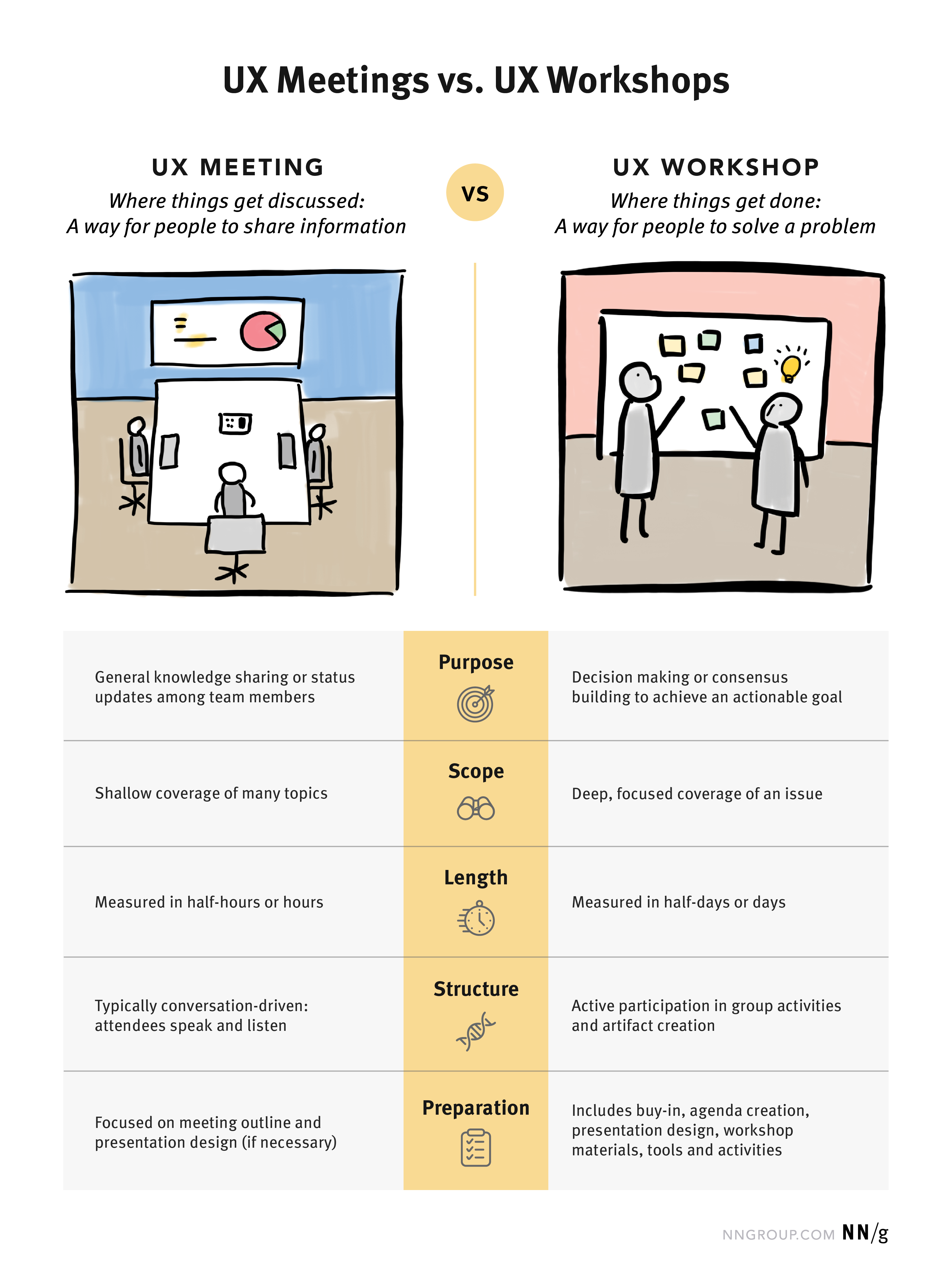
- La Riunione (Meeting): È uno scambio di pacchetti dati. Serve per condividere informazioni, fare status update o sincronizzare i team. È spesso passiva: si ascolta, si annuisce, si assorbe.
- Il Workshop: È un ambiente di elaborazione. È il luogo dove "si fanno le cose". Non ci limitiamo a parlare; risolviamo problemi, generiamo idee e produciamo un output tangibile e azionabile.
Il workshop non è una riunione più lunga. È un laboratorio artigianale dove non si "parla di lavoro", ma si fa il lavoro. È lo spazio protetto dove le idee non sono solo sussurrate, ma trattate come materia prima da plasmare. In questo laboratorio, noi non "parliamo di lavoro": noi facciamo il lavoro. Passiamo dall'informazione passiva alla creazione collettiva di manufatti tangibili.
Neutralizzare la "Voce più Grossa": la forza della facilitazione
Nelle riunioni classiche, spesso vince chi urla di più o chi siede più in alto nella gerarchia. Questo uccide l'innovazione e aliena i talenti. Il workshop scardina questa dinamica sbilanciata attraverso la figura del facilitatore neutrale. Il facilitatore non entra nel merito delle vostre dispute tecniche; il suo compito è proteggere il processo. La facilitazione neutrale garantisce che l'intelligenza collettiva non sia soffocata dai bias individuali. I vantaggi sono immediati:
- Shared Ownership: quando una soluzione nasce da un workshop, non è "la decisione del capo", ma un manufatto di cui l'intero team si sente proprietario. Questo abbatte drasticamente le frizioni nella fase di delivery.
- Decisioni basate sull'evidenza: si decide sui dati e sui risultati delle attività pratiche, non sulle sensazioni soggettive dell'ultimo minuto.
Questo "sfruttamento dell'intelligenza collettiva" permette di risolvere problemi complessi che nessun singolo individuo (o algoritmo) potrebbe risolvere da solo.
La disciplina del "Fare": diverge-and-converge
Un workshop non è un brainstorming caotico, ma una disciplina rigorosa che segue il ciclo di Divergenza e Convergenza. È un processo strutturato per impedire il consenso prematuro e forzare l'esplorazione.
- Divergenza: generare massa critica. In questa fase esplodiamo le possibilità. Utilizziamo tecniche come il Silent Writing (scrittura silenziosa): obblighiamo ogni partecipante a scrivere le proprie idee in autonomia prima di condividerle. Perché? Perché il silenzio è lo strumento più potente per garantire che ogni voce sia ascoltata, neutralizzando l'influenza di chi tende a dominare la conversazione. Con l'aiuto dell'AI possiamo anche creare veloci prototipi, se scrivere non è abbastanza.
- Convergenza: sintetizzare e decidere. Una volta prodotta la materia prima, dobbiamo raffinarla. Non usiamo discussioni infinite, ma strumenti di prioritizzazione come il Dot Voting (votazione ponderata) o le matrici impatto/sforzo.
In un workshop si esce sempre con una direzione: o si decide di procedere con un'azione definita, o si decide consapevolmente di scartare un'idea. Il "ne riparliamo" non è un output ammesso.
L'Era dell'IA: la riflessione come vantaggio competitivo
Oggi l'Intelligenza Artificiale rende l'esecuzione rapida e, in prospettiva, quasi gratuita. Il rischio per un'azienda di consulenza è cadere nel "fare compulsivo": correre velocissimi verso la direzione sbagliata.
Mentre l'IA automatizza la produzione, il workshop diventa il nostro ultimo, vero vantaggio competitivo non automatizzabile. È lo spazio sacro per la riflessione collettiva e la strategia umana, in cui l'intelligenza umana e quella artificiale operano in sinergia: mentre i modelli eseguono i processi, l'uomo ne supervisiona l'efficacia e la coerenza
La velocità è nulla senza il pensiero critico. Partecipare a un workshop significa smettere di correre a vuoto per iniziare a progettare con intelligenza. Chi usa l'AI come alleata, restando però al centro delle decisioni strategiche, non si limita a stare al passo con il futuro: lo definisce.
Garbage In, Garbage Out: la preparazione
Affinché un workshop non sia una perdita di tempo, deve rispettare regole precise. Un workshop richiede una preparazione molto più pesante di una riunione. Se vi invito a un workshop, sappiate che dietro c'è stato un lavoro di design dell'agenda per garantire che ogni minuto sia produttivo. Se non c'è un obiettivo definito (un "actionable goal"), non è un workshop, è solo chiacchiere.
Il Team HCD può essere il facilitatore che state cercando per i vostri workshop
All'interno del team Human-Centered Design abbiamo facilitatori esperti pronti ad abilitare i vostri team attraverso metodologie collaudate (Nielsen Norman Group). Ecco come possiamo collaborare per trasformare le vostre sfide in risultati attraverso workshop specifici:
- Discovery Workshops: per allineare gli stakeholder e comprendere lo stato attuale di un progetto complesso.
- Empathy Workshops: per costruire una comprensione profonda delle necessità dei nostri utenti prima di scrivere una sola riga di codice.
- Design Workshops: per generare rapidamente una vasta gamma di soluzioni da prospettive diverse.
- Prioritization Workshops: per decidere cosa è davvero importante quando tutto sembra urgente.
- Critique Workshops: per analizzare e migliorare collettivamente un progetto in corso, garantendo che rispetti gli obiettivi.
Mettiamo a disposizione il design dell'agenda, la moderazione neutrale e la sintesi degli output per trasformare il vostro tempo in valore tangibile.
Un invito alla rivoluzione collaborativa
Il tempo in Sorint è la risorsa più preziosa che abbiamo. Onorarlo non significa riempire i calendari di meeting, ma avere il coraggio di pretendere momenti di collaborazione che producano un impatto reale.
Il tempo non torna indietro. Usiamolo per costruire, non per discutere senza fine. Vi invitiamo a sfidare lo status quo: se avete un problema complesso, una decisione strategica o una sfida tecnica che sembra insormontabile, non inviate l'ennesimo invito a una riunione.
La prossima volta che vedete quell'invito in calendario, non consideratelo un'interruzione del vostro lavoro. Consideratelo come il momento in cui passiamo dalla modalità "esecuzione cieca" alla modalità "decisione strategica".
Il workshop è lo strumento che ci permette di prendere decisioni comuni, rapide e validate, evitando di sprecare sprint interi a sviluppare prodotti che nessuno vuole. In un mondo veloce e automatizzato, la capacità di fermarsi a ragionare insieme è la vera killer app.
Contattate il team HCD. Progettiamo insieme il vostro prossimo workshop e trasformiamo la collaborazione in una forza produttiva inarrestabile.
It's Not "Just a Longer Meeting": Transforming collaboration at Sorint through workshops
In an era where AI generates code and content at lightning speed, pausing to "think together" is the only competitive advantage we have left.
The Paradox of the "Endless Meeting": beyond mental drain
I know what you're thinking when an invitation for a "4-hour Workshop" pops up on your calendar. The instinctive reaction of a technical profile is often: "Here we go, another interminable meeting that could have been an email. When will I find time to work?"
As the Lead of the Human Centered Design team, I am here to debunk a dangerous myth:
a workshop is not a long meeting. If it seemed that way to you in the past, it was likely a poorly designed workshop.
Today, I want to explain the technical and functional difference between the two, and why, paradoxically, the advent of Artificial Intelligence makes workshops the most valuable tool for our technological and decision-making stack.
Meeting vs. Workshop: a strategic distinction
Confusing these two tools is a mistake that costs dearly in terms of focus and results. For us in the Human-Centered Design (HCD) team, the distinction is clear and must become so for the entire organization. Below is a source from theNngroup that explains the key principles.
- The Meeting: it is an exchange of data packets. It is used to share information, provide status updates, or synchronize teams. It is often passive: you listen, you nod, you absorb.
- The Workshop: it is a processing environment. It is the place where "things get done." We don't just talk; we solve problems, generate ideas, and produce a tangible, actionable output.
A workshop is not a longer meeting. It is a craft laboratory where you do not "talk about work," but you do the work. It is the protected space where ideas are not just whispered, but treated as raw material to be shaped. In this laboratory, we do not "talk about work": we do the work. We move from passive information to the collective creation of tangible artifacts.
Neutralizing the "Loudest Voice": the power of facilitation
In classic meetings, the person who shouts the loudest or who sits highest in the hierarchy often wins. This kills innovation and alienates talent. The workshop disrupts this unbalanced dynamic through the figure of the neutral facilitator. The facilitator does not get involved in the merits of your technical disputes; their job is to protect the process. Neutral facilitation ensures that collective intelligence is not suffocated by individual biases. The advantages are immediate:
- Shared Ownership: When a solution is born from a workshop, it is not "the boss's decision," but an artifact that the entire team feels ownership of. This drastically reduces friction during the delivery phase.
- Evidence-Based Decisions: Decisions are made based on data and the results of practical activities, not on subjective last-minute feelings.
This "exploitation of collective intelligence" allows complex problems to be solved that no single individual ( or algorithm) could solve alone.
The Discipline of "Doing": diverge-and-converge
A workshop is not a chaotic brainstorming session, but a rigorous discipline that follows the Divergence and Convergence cycle. It is a structured process to prevent premature consensus and force exploration.
- Divergence: Generating Critical Mass. In this phase, we explode the possibilities. We use techniques like Silent Writing: we oblige every participant to write down their ideas independently before sharing them. Why? Because silence is the most powerful tool to ensure every voice is heard, neutralizing the influence of those who tend to dominate the conversation.
- Convergence: Synthesizing and Deciding. Once the raw material is produced, we must refine it. We do not use endless discussions, but prioritization tools like Dot Voting or impact/effort matrices.
In a workshop, you always leave with a direction: either you decide to proceed with a defined action, or you consciously decide to discard an idea. "We'll talk about it later" is not an admissible output.
The AI Era: Reflection as a Competitive Advantage
Today, Artificial Intelligence makes execution fast and, prospectively, almost free. The risk for a consulting company is falling into "compulsive doing": running very fast in the wrong direction.
While AI automates production, the workshop becomes our last, true, non-automatable competitive advantage. It is the sacred space for collective reflection and human strategy. Stopping for a workshop is not a waste of time; it is the only way to ensure that our speed is supported by critical thinking. In a world that runs without thinking, those who stop to plan together win.
Garbage In, Garbage Out: Preparation
For a workshop not to be a waste of time, it must adhere to precise rules. A workshop requires much heavier preparation than a meeting. If I invite you to a workshop, know that there has been agenda design work behind it to ensure that every minute is productive. If there is no defined objective (an "actionable goal"), it is not a workshop, it is just chatter.The HCD Team can be the facilitator you are looking for for your workshops
The HCD Team can be the facilitator you are looking for for your workshops
Within the Human-Centered Design team, we have expert facilitators ready to enable your teams through proven methodologies (Nielsen Norman Group). Here's how we can collaborate to transform your challenges into results through specific workshops:
- Discovery Workshops: To align stakeholders and understand the current state of a complex project.
- Empathy Workshops: To build a deep understanding of our users' needs before writing a single line of code.
- Design Workshops: To rapidly generate a wide range of solutions from different perspectives.
- Prioritization Workshops: To decide what is truly important when everything seems urgent.
- Critique Workshops: To collectively analyze and improve an ongoing project, ensuring it meets objectives.
We provide agenda design, neutral moderation, and output synthesis to transform your time into tangible value.
An Invitation to the Collaborative Revolution
Time at Sorint is the most valuable resource we have. Honoring it does not mean filling calendars with meetings, but having the courage to demand moments of collaboration that produce a real impact.
Time does not turn back. Let's use it to build, not to discuss endlessly. We invite you to challenge the status quo: if you have a complex problem, a strategic decision, or a technical challenge that seems insurmountable, do not send yet another meeting invitation.
The next time you see that invitation on the calendar, do not consider it an interruption of your work. Consider it the moment we move from "blind execution" mode to "strategic decision" mode.
The workshop is the tool that allows us to make common, rapid, and validated decisions, avoiding wasting entire sprints developing products that no one wants. In a fast and automated world, the ability to stop and reason together is the real killer app.
Contact the HCD team. Let's design your next workshop together and transform collaboration into an unstoppable productive force.